
Headshot Photography Business Best Practices That Work
Headshot Photography Business Best Practices That Work
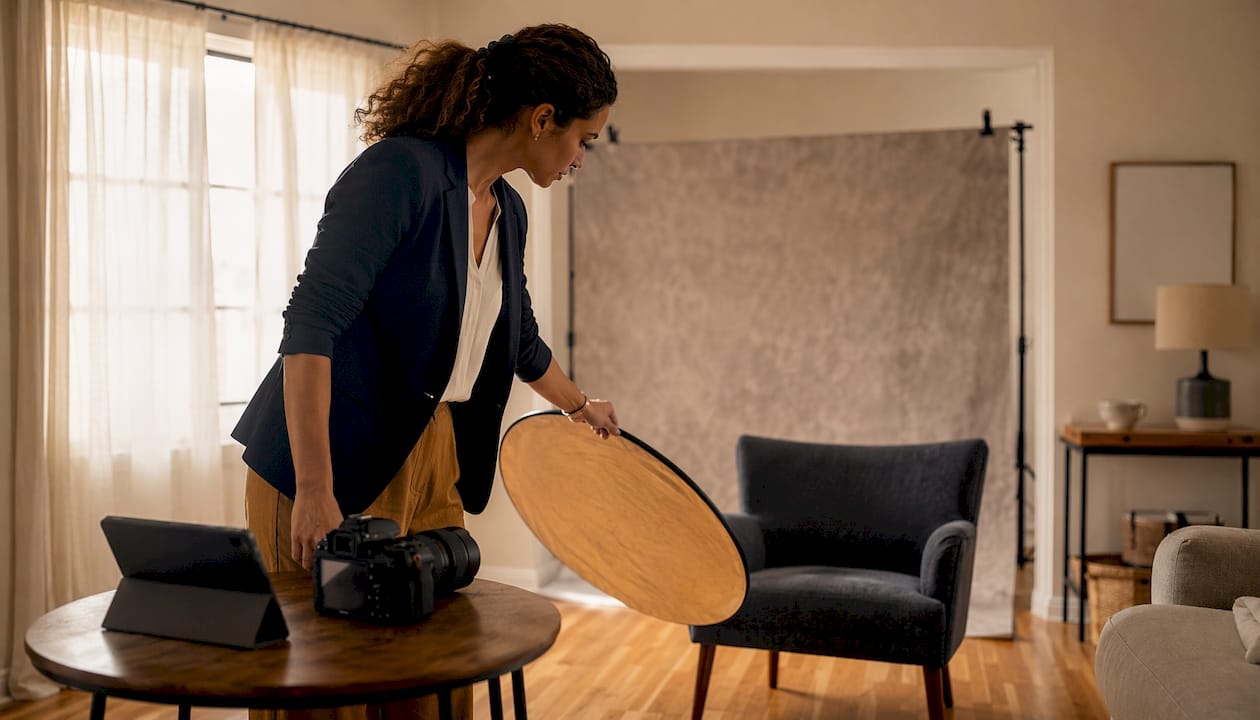
Running a profitable headshot photography business takes more than a sharp eye and good gear. The photographers who build lasting, consistent revenue combine technical mastery with real business discipline: a defined niche, a clean portfolio, a marketing system that runs without constant attention, and a delivery workflow that makes clients want to rebook. These headshot photography business best practices cover every layer of that operation, from your lighting setup to your LLC paperwork.
Here’s what the strongest headshot businesses have in common:
Technical consistency: Repeatable lighting, posing, and retouching that clients can count on session after session
Niche clarity: A focused market (corporate teams, actors, entrepreneurs) that shapes every pricing and marketing decision
Portfolio quality: A curated body of work that reflects your current skill and your target client’s expectations
Marketing systems: Google Business Profile, email nurture sequences, and direct outreach working together
Legal and financial structure: Proper registration, insurance, and contracts that protect your cash flow
Professional delivery: Galleries and print sales that extend the client relationship beyond the shoot day
What are the best practices for headshot photography business success?
The photographers who thrive in this niche treat every session as a repeatable product, not a one-off creative event. That mindset shapes everything from how you set up your lights to how you write your contracts.
Corporate clients, in particular, buy reliability and consistency rather than photographic artistry. They’re purchasing the ability to put 40 people in front of a camera in one day and get images that look like they belong to the same organization. Photographers who position their service as a business solution, rather than a creative session, convert and retain those clients far more effectively.
Operational predictability is what separates a headshot studio that grows from one that stagnates. When your lighting, cropping, color grading, and turnaround time are consistent, clients stop worrying about whether the next shoot will match the last one. That trust is what drives annual rebooking and referrals.
How to master the technical skills that define great headshots
Lighting is where professional headshots are made or broken. A 45-degree key light positioned slightly above eye level creates natural depth and flattering shadows. Butterfly lighting produces symmetrical shadows under the nose, while a clamshell setup (two lights plus a reflector) delivers the clean, even look that corporate clients expect. Neither requires an elaborate studio; a compact strobe like a Profoto B10 or Godox AD200 with a medium softbox handles both configurations.

Aperture settings between f/2.8 and f/5.6 keep eyes tack-sharp while separating the subject from the background with a gentle blur. Eyes must be the sharpest point in any headshot. If they’re soft, nothing else in the frame saves the image. Use single-point autofocus or Eye AF, and keep your shutter speed at 1/160 or faster to eliminate motion blur.
Posing is a coaching skill as much as a photographic one. Angling shoulders 10 to 30 degrees away from the camera and using short, clear verbal prompts produces natural expressions and dimensional images. Flat, square-on poses read as stiff and diminish engagement. Tell clients to imagine a string lifting the top of their head, drop their right shoulder slightly toward you, and bring their chin forward and down just a touch. Those three adjustments alone transform most headshots.
Post-processing should preserve, not erase. Professional retouching removes transient distractions like temporary blemishes and flyaway hairs while keeping skin texture intact. Over-smoothed skin reads as artificial, and clients notice, even when they can’t name exactly what feels off. Subtle eye brightening and skin smoothing maintain authenticity. That authenticity is what clients value most, and it’s what keeps them coming back.
Pro Tip: Build a retouching checklist and apply it identically to every image in a corporate batch. Consistent color grading and retouching across a team set is one of the strongest signals of professionalism, and it’s the detail that reduces visual inconsistency that drives clients to switch providers.
For deeper guidance on posing and lighting in corporate contexts, the business portrait photography guide at Photivo covers both in detail.
Why specializing in a niche makes your headshot business stronger
Generalist photographers compete on price. Niche photographers compete on fit. Choosing a specific segment of the headshot market, whether that’s corporate teams, actors, real estate agents, or entrepreneurs, lets you build a portfolio, a pricing structure, and a marketing message that speaks directly to one buyer’s needs.

Corporate clients have fundamentally different expectations than actors or personal branding clients. A law firm wants neutral backgrounds, conservative styling, and consistent crops across 30 attorneys. An actor needs two to three distinct looks that meet casting director expectations. Trying to serve both audiences with the same messaging dilutes both. Pick one, build your reputation there, and expand later if the market supports it.
Researching local demand before committing to a niche takes less time than most photographers expect. Check LinkedIn for the density of corporate headquarters, law firms, real estate agencies, and financial services companies in your metro. Look at which photographers are already serving those clients and what gaps exist in quality, turnaround, or pricing. A niche with strong local demand and weak competition is a far better starting point than a crowded consumer market.
Your niche also shapes your pricing. Volume pricing with per-seat rates suits corporate contracts, with discounts typically triggered at team sizes of 20, 50, and 100 employees. That structure aligns with how corporate procurement actually works and makes your service easier to approve through an HR or marketing budget. Consumer niches like actors or entrepreneurs price differently, usually per session with package tiers.
How to build a headshot portfolio that converts inquiries into bookings
Your portfolio is your most persuasive sales asset, and most photographers underinvest in it. Every image you show should reflect your current skill level, your target client’s expectations, and the specific niche you’ve chosen. A portfolio full of dramatic, moody lighting won’t convert corporate HR managers, even if the photography is technically excellent.
Consistency across your portfolio matters as much as the quality of individual images. 41% of corporate clients switch providers because their existing headshots look inconsistent, not because they’re technically bad. When your portfolio shows the same color palette, the same retouching style, and the same cropping standard across every image, it signals that you can deliver that consistency for their team.
Update your portfolio regularly, at least every six months, to reflect your current capabilities. Showing work from three years ago when your lighting and retouching have improved significantly undersells you. Include variety within your niche: different skin tones, different wardrobe styles, different expressions, but keep the technical standards identical across all of them.
For digital presentation, a clean, fast-loading gallery is worth more than a complicated website. Clients should be able to see your work within seconds of landing on your page. Photivo’s portrait session gallery setup guide covers how to structure those galleries for maximum impact and client confidence.
What marketing strategies actually fill a headshot photographer’s calendar?
The most effective marketing system for a headshot business runs on three channels working together: local search, direct outreach, and a follow-up sequence that converts inquiries over time. Relying on any single channel creates fragility.
Your Google Business Profile is the highest-return marketing investment available to a local headshot photographer, and it’s free. The Map Pack (the three local listings at the top of Google search results) drives a disproportionate share of local bookings. A fully completed profile with accurate categories, a detailed description using your service keywords, and a minimum of 20 recent reviews will outrank competitors who’ve been in the market longer but aren’t actively maintaining their presence.
Direct outreach to local businesses, particularly law firms, real estate agencies, and financial services companies, is labor-intensive but produces high-value group bookings. LinkedIn makes this efficient: a connection request followed by a short, specific message that references a recent hire or rebrand and positions your service as a solution to a real business need converts reasonably well. The message should lead with value, not a pitch.
A follow-up email sequence that delivers genuinely useful preparation and booking information over two to four weeks converts far more inquiries than a single response ever will. The first reply should arrive within minutes of the inquiry. Every subsequent email should be useful whether the person books or not. That approach builds trust and makes the eventual booking decision feel natural rather than pressured.
Pro Tip: Same-day preview delivery within two hours of a session is a closing differentiator at the mid-market corporate level. Companies use headshots for immediate announcements and website refreshes. A photographer who delivers two or three selects the same afternoon wins the rebooking before the competition even follows up.
For a fuller picture of how to position headshot services as a business solution that resonates with HR and marketing buyers, the guide on corporate headshot recruitment marketing is worth reading alongside your outreach strategy.
How does professional gallery delivery increase revenue and rebooking rates?
Delivery is where the client relationship either deepens or ends. A photographer who shoots beautifully but delivers files via a generic download link, with no proofing workflow and no upsell path, leaves real revenue on the table and misses the moment when clients are most emotionally invested in their images.
A standardized delivery workflow builds confidence. Final retouched files delivered in 48 to 72 hours, with a clear proofing round built in, sets expectations that clients can plan around. For corporate clients, that predictability is part of what they’re paying for. Slow turnaround causes placeholder photos on team pages and delayed website launches, and those delays compound into frustration that erodes the relationship.
Usage rights and licensing terms belong in your contract, not in a verbal conversation after the shoot. Company clients need internal use, website use, press use, and social media use. Photographers retain portfolio rights. Any advertising use is a separate conversation with a commercial usage fee. Spelling this out in writing protects both parties and prevents the “can we use this for our billboard?” conversation six months later.
Upselling retouching and prints inside the gallery is where platforms like Photivo genuinely earn their place in your workflow. When clients can browse their proofed images, select additional retouching, and order prints or digital downloads in one beautiful, branded experience, the average order value rises and the client feels cared for rather than sold to. That combination of professional delivery and personal presentation is what drives referrals and repeat bookings. The gallery delivery guide at Photivo covers how to structure that experience from proofing through final sale.
How to set up the legal and financial structure of your headshot business
Registering your business properly protects your personal assets and signals professionalism to corporate clients. Most solo headshot photographers start as a sole proprietor or single-member LLC. An LLC costs between $50 and $500 to form depending on your state, and it creates a legal separation between your personal finances and your business liabilities. If a client disputes a contract or a piece of equipment damages property on location, that separation matters.
Photography business insurance covers two distinct risks: equipment and liability. General liability insurance protects you if a client or bystander is injured during a shoot. Equipment insurance covers cameras, lenses, and lighting gear against theft or damage. Both are available through carriers like Hill & Usher or through professional associations like the Professional Photographers of America (PPA), which offers member coverage options.
Contracts are non-negotiable for corporate work. Net-30 payment terms, a cancellation clause (50% of the project fee if cancelled within 14 days, 100% within 48 hours), and a re-shoot policy for new hires within 90 days of the original shoot protect your cash flow and keep the client relationship active. Corporate buyers expect these terms. A contract without them reads as amateur.
Tax obligations for a photography business include quarterly estimated payments to the IRS, self-employment tax on net income, and potentially state sales tax on photography services depending on your jurisdiction. Keep business and personal accounts separate from day one. Accounting software like QuickBooks Self-Employed or Wave makes tracking income, expenses, and deductions straightforward. A W-9 on file for every corporate client simplifies year-end reporting.
How should you price headshot photography services and packages?
Pricing headshots without a clear structure leaves money on the table and confuses clients. The national median for a standard studio headshot session is about $250, with most mid-market sessions falling between $300 and $550. Premium photographers in major coastal cities charge $600 to $1,500 or more. Sun Belt metros like Phoenix, Houston, and Dallas start around $150.
For individual sessions, three tiers work well. An entry-level package covers a 30-minute session, one backdrop, and two to three retouched finals. A mid-tier package adds a second look, more session time, and five to ten retouched images with full commercial rights. A premium package includes on-location shooting, hair and makeup coordination, and extended licensing. Each tier should have a clear deliverable list so clients can compare total value, not just headline price.
Corporate and team pricing follows a different logic. Per-seat rates typically range from $75 to $250, with volume discounts at 20, 50, and 100 employees. Onsite shoots for teams of 20 or more are nearly always the right choice logistically. For smaller groups of 10 or fewer, studio shoots make more sense, especially when the client wants a specific branded background.
Add-ons are where packages grow organically. Advanced retouching, rush delivery, additional retouched images, and commercial usage upgrades all price separately. Be transparent about what’s included and what costs extra before the client books. A $250 session with per-image retouching charges frequently ends up more expensive than a $395 all-inclusive package once the client selects the images they actually need.
Key Takeaways
A successful headshot photography business requires consistent technical execution, a defined niche, and a marketing and delivery system that compounds over time.
Point | Details |
|---|---|
Technical consistency drives rebooking | Repeatable lighting, posing, and retouching build the trust that turns one-time clients into annual accounts. |
Niche focus sharpens your pricing | Corporate per-seat rates ($75–$250) and volume discounts align with how procurement buyers actually budget. |
Portfolio consistency converts inquiries | 41% of corporate clients switch providers due to visual inconsistency, not poor individual image quality. |
Delivery workflow protects revenue | Same-day previews and a clear proofing process reduce churn and create natural upsell opportunities. |
Contracts protect cash flow | Net-30 terms, cancellation clauses, and re-shoot policies are standard expectations for corporate buyers. |
When you’re ready to deliver galleries that feel as polished as the headshots inside them, Photivo gives you a beautiful, branded space to proof images, sell prints and digital downloads, and build the kind of client experience that generates referrals. Try it free and see how it fits your workflow.
Recommended
Headshot Photography Business Best Practices That Work
Running a profitable headshot photography business takes more than a sharp eye and good gear. The photographers who build lasting, consistent revenue combine technical mastery with real business discipline: a defined niche, a clean portfolio, a marketing system that runs without constant attention, and a delivery workflow that makes clients want to rebook. These headshot photography business best practices cover every layer of that operation, from your lighting setup to your LLC paperwork.
Here’s what the strongest headshot businesses have in common:
Technical consistency: Repeatable lighting, posing, and retouching that clients can count on session after session
Niche clarity: A focused market (corporate teams, actors, entrepreneurs) that shapes every pricing and marketing decision
Portfolio quality: A curated body of work that reflects your current skill and your target client’s expectations
Marketing systems: Google Business Profile, email nurture sequences, and direct outreach working together
Legal and financial structure: Proper registration, insurance, and contracts that protect your cash flow
Professional delivery: Galleries and print sales that extend the client relationship beyond the shoot day
What are the best practices for headshot photography business success?
The photographers who thrive in this niche treat every session as a repeatable product, not a one-off creative event. That mindset shapes everything from how you set up your lights to how you write your contracts.
Corporate clients, in particular, buy reliability and consistency rather than photographic artistry. They’re purchasing the ability to put 40 people in front of a camera in one day and get images that look like they belong to the same organization. Photographers who position their service as a business solution, rather than a creative session, convert and retain those clients far more effectively.
Operational predictability is what separates a headshot studio that grows from one that stagnates. When your lighting, cropping, color grading, and turnaround time are consistent, clients stop worrying about whether the next shoot will match the last one. That trust is what drives annual rebooking and referrals.
How to master the technical skills that define great headshots
Lighting is where professional headshots are made or broken. A 45-degree key light positioned slightly above eye level creates natural depth and flattering shadows. Butterfly lighting produces symmetrical shadows under the nose, while a clamshell setup (two lights plus a reflector) delivers the clean, even look that corporate clients expect. Neither requires an elaborate studio; a compact strobe like a Profoto B10 or Godox AD200 with a medium softbox handles both configurations.
Aperture settings between f/2.8 and f/5.6 keep eyes tack-sharp while separating the subject from the background with a gentle blur. Eyes must be the sharpest point in any headshot. If they’re soft, nothing else in the frame saves the image. Use single-point autofocus or Eye AF, and keep your shutter speed at 1/160 or faster to eliminate motion blur.
Posing is a coaching skill as much as a photographic one. Angling shoulders 10 to 30 degrees away from the camera and using short, clear verbal prompts produces natural expressions and dimensional images. Flat, square-on poses read as stiff and diminish engagement. Tell clients to imagine a string lifting the top of their head, drop their right shoulder slightly toward you, and bring their chin forward and down just a touch. Those three adjustments alone transform most headshots.
Post-processing should preserve, not erase. Professional retouching removes transient distractions like temporary blemishes and flyaway hairs while keeping skin texture intact. Over-smoothed skin reads as artificial, and clients notice, even when they can’t name exactly what feels off. Subtle eye brightening and skin smoothing maintain authenticity. That authenticity is what clients value most, and it’s what keeps them coming back.
Pro Tip: Build a retouching checklist and apply it identically to every image in a corporate batch. Consistent color grading and retouching across a team set is one of the strongest signals of professionalism, and it’s the detail that reduces visual inconsistency that drives clients to switch providers.
For deeper guidance on posing and lighting in corporate contexts, the business portrait photography guide at Photivo covers both in detail.
Why specializing in a niche makes your headshot business stronger
Generalist photographers compete on price. Niche photographers compete on fit. Choosing a specific segment of the headshot market, whether that’s corporate teams, actors, real estate agents, or entrepreneurs, lets you build a portfolio, a pricing structure, and a marketing message that speaks directly to one buyer’s needs.
Corporate clients have fundamentally different expectations than actors or personal branding clients. A law firm wants neutral backgrounds, conservative styling, and consistent crops across 30 attorneys. An actor needs two to three distinct looks that meet casting director expectations. Trying to serve both audiences with the same messaging dilutes both. Pick one, build your reputation there, and expand later if the market supports it.
Researching local demand before committing to a niche takes less time than most photographers expect. Check LinkedIn for the density of corporate headquarters, law firms, real estate agencies, and financial services companies in your metro. Look at which photographers are already serving those clients and what gaps exist in quality, turnaround, or pricing. A niche with strong local demand and weak competition is a far better starting point than a crowded consumer market.
Your niche also shapes your pricing. Volume pricing with per-seat rates suits corporate contracts, with discounts typically triggered at team sizes of 20, 50, and 100 employees. That structure aligns with how corporate procurement actually works and makes your service easier to approve through an HR or marketing budget. Consumer niches like actors or entrepreneurs price differently, usually per session with package tiers.
How to build a headshot portfolio that converts inquiries into bookings
Your portfolio is your most persuasive sales asset, and most photographers underinvest in it. Every image you show should reflect your current skill level, your target client’s expectations, and the specific niche you’ve chosen. A portfolio full of dramatic, moody lighting won’t convert corporate HR managers, even if the photography is technically excellent.
Consistency across your portfolio matters as much as the quality of individual images. 41% of corporate clients switch providers because their existing headshots look inconsistent, not because they’re technically bad. When your portfolio shows the same color palette, the same retouching style, and the same cropping standard across every image, it signals that you can deliver that consistency for their team.
Update your portfolio regularly, at least every six months, to reflect your current capabilities. Showing work from three years ago when your lighting and retouching have improved significantly undersells you. Include variety within your niche: different skin tones, different wardrobe styles, different expressions, but keep the technical standards identical across all of them.
For digital presentation, a clean, fast-loading gallery is worth more than a complicated website. Clients should be able to see your work within seconds of landing on your page. Photivo’s portrait session gallery setup guide covers how to structure those galleries for maximum impact and client confidence.
What marketing strategies actually fill a headshot photographer’s calendar?
The most effective marketing system for a headshot business runs on three channels working together: local search, direct outreach, and a follow-up sequence that converts inquiries over time. Relying on any single channel creates fragility.
Your Google Business Profile is the highest-return marketing investment available to a local headshot photographer, and it’s free. The Map Pack (the three local listings at the top of Google search results) drives a disproportionate share of local bookings. A fully completed profile with accurate categories, a detailed description using your service keywords, and a minimum of 20 recent reviews will outrank competitors who’ve been in the market longer but aren’t actively maintaining their presence.
Direct outreach to local businesses, particularly law firms, real estate agencies, and financial services companies, is labor-intensive but produces high-value group bookings. LinkedIn makes this efficient: a connection request followed by a short, specific message that references a recent hire or rebrand and positions your service as a solution to a real business need converts reasonably well. The message should lead with value, not a pitch.
A follow-up email sequence that delivers genuinely useful preparation and booking information over two to four weeks converts far more inquiries than a single response ever will. The first reply should arrive within minutes of the inquiry. Every subsequent email should be useful whether the person books or not. That approach builds trust and makes the eventual booking decision feel natural rather than pressured.
Pro Tip: Same-day preview delivery within two hours of a session is a closing differentiator at the mid-market corporate level. Companies use headshots for immediate announcements and website refreshes. A photographer who delivers two or three selects the same afternoon wins the rebooking before the competition even follows up.
For a fuller picture of how to position headshot services as a business solution that resonates with HR and marketing buyers, the guide on corporate headshot recruitment marketing is worth reading alongside your outreach strategy.
How does professional gallery delivery increase revenue and rebooking rates?
Delivery is where the client relationship either deepens or ends. A photographer who shoots beautifully but delivers files via a generic download link, with no proofing workflow and no upsell path, leaves real revenue on the table and misses the moment when clients are most emotionally invested in their images.
A standardized delivery workflow builds confidence. Final retouched files delivered in 48 to 72 hours, with a clear proofing round built in, sets expectations that clients can plan around. For corporate clients, that predictability is part of what they’re paying for. Slow turnaround causes placeholder photos on team pages and delayed website launches, and those delays compound into frustration that erodes the relationship.
Usage rights and licensing terms belong in your contract, not in a verbal conversation after the shoot. Company clients need internal use, website use, press use, and social media use. Photographers retain portfolio rights. Any advertising use is a separate conversation with a commercial usage fee. Spelling this out in writing protects both parties and prevents the “can we use this for our billboard?” conversation six months later.
Upselling retouching and prints inside the gallery is where platforms like Photivo genuinely earn their place in your workflow. When clients can browse their proofed images, select additional retouching, and order prints or digital downloads in one beautiful, branded experience, the average order value rises and the client feels cared for rather than sold to. That combination of professional delivery and personal presentation is what drives referrals and repeat bookings. The gallery delivery guide at Photivo covers how to structure that experience from proofing through final sale.
How to set up the legal and financial structure of your headshot business
Registering your business properly protects your personal assets and signals professionalism to corporate clients. Most solo headshot photographers start as a sole proprietor or single-member LLC. An LLC costs between $50 and $500 to form depending on your state, and it creates a legal separation between your personal finances and your business liabilities. If a client disputes a contract or a piece of equipment damages property on location, that separation matters.
Photography business insurance covers two distinct risks: equipment and liability. General liability insurance protects you if a client or bystander is injured during a shoot. Equipment insurance covers cameras, lenses, and lighting gear against theft or damage. Both are available through carriers like Hill & Usher or through professional associations like the Professional Photographers of America (PPA), which offers member coverage options.
Contracts are non-negotiable for corporate work. Net-30 payment terms, a cancellation clause (50% of the project fee if cancelled within 14 days, 100% within 48 hours), and a re-shoot policy for new hires within 90 days of the original shoot protect your cash flow and keep the client relationship active. Corporate buyers expect these terms. A contract without them reads as amateur.
Tax obligations for a photography business include quarterly estimated payments to the IRS, self-employment tax on net income, and potentially state sales tax on photography services depending on your jurisdiction. Keep business and personal accounts separate from day one. Accounting software like QuickBooks Self-Employed or Wave makes tracking income, expenses, and deductions straightforward. A W-9 on file for every corporate client simplifies year-end reporting.
How should you price headshot photography services and packages?
Pricing headshots without a clear structure leaves money on the table and confuses clients. The national median for a standard studio headshot session is about $250, with most mid-market sessions falling between $300 and $550. Premium photographers in major coastal cities charge $600 to $1,500 or more. Sun Belt metros like Phoenix, Houston, and Dallas start around $150.
For individual sessions, three tiers work well. An entry-level package covers a 30-minute session, one backdrop, and two to three retouched finals. A mid-tier package adds a second look, more session time, and five to ten retouched images with full commercial rights. A premium package includes on-location shooting, hair and makeup coordination, and extended licensing. Each tier should have a clear deliverable list so clients can compare total value, not just headline price.
Corporate and team pricing follows a different logic. Per-seat rates typically range from $75 to $250, with volume discounts at 20, 50, and 100 employees. Onsite shoots for teams of 20 or more are nearly always the right choice logistically. For smaller groups of 10 or fewer, studio shoots make more sense, especially when the client wants a specific branded background.
Add-ons are where packages grow organically. Advanced retouching, rush delivery, additional retouched images, and commercial usage upgrades all price separately. Be transparent about what’s included and what costs extra before the client books. A $250 session with per-image retouching charges frequently ends up more expensive than a $395 all-inclusive package once the client selects the images they actually need.
Key Takeaways
A successful headshot photography business requires consistent technical execution, a defined niche, and a marketing and delivery system that compounds over time.
Point | Details |
|---|---|
Technical consistency drives rebooking | Repeatable lighting, posing, and retouching build the trust that turns one-time clients into annual accounts. |
Niche focus sharpens your pricing | Corporate per-seat rates ($75–$250) and volume discounts align with how procurement buyers actually budget. |
Portfolio consistency converts inquiries | 41% of corporate clients switch providers due to visual inconsistency, not poor individual image quality. |
Delivery workflow protects revenue | Same-day previews and a clear proofing process reduce churn and create natural upsell opportunities. |
Contracts protect cash flow | Net-30 terms, cancellation clauses, and re-shoot policies are standard expectations for corporate buyers. |
When you’re ready to deliver galleries that feel as polished as the headshots inside them, Photivo gives you a beautiful, branded space to proof images, sell prints and digital downloads, and build the kind of client experience that generates referrals. Try it free and see how it fits your workflow.
Recommended
Explore More Articles


GEt started for free
Elevate your business with intuitive galleries with Photivo
Ready to Grow Your Photography Business? Sign Up Today!

GEt started for free
Elevate your business with intuitive galleries with Photivo
Ready to Grow Your Photography Business? Sign Up Today!
GEt started for free
Elevate your business with intuitive galleries with Photivo
Ready to Grow Your Photography Business? Sign Up Today!