
Image Licensing Photography: A Guide for Photographers

Image Licensing Photography: A Guide for Photographers
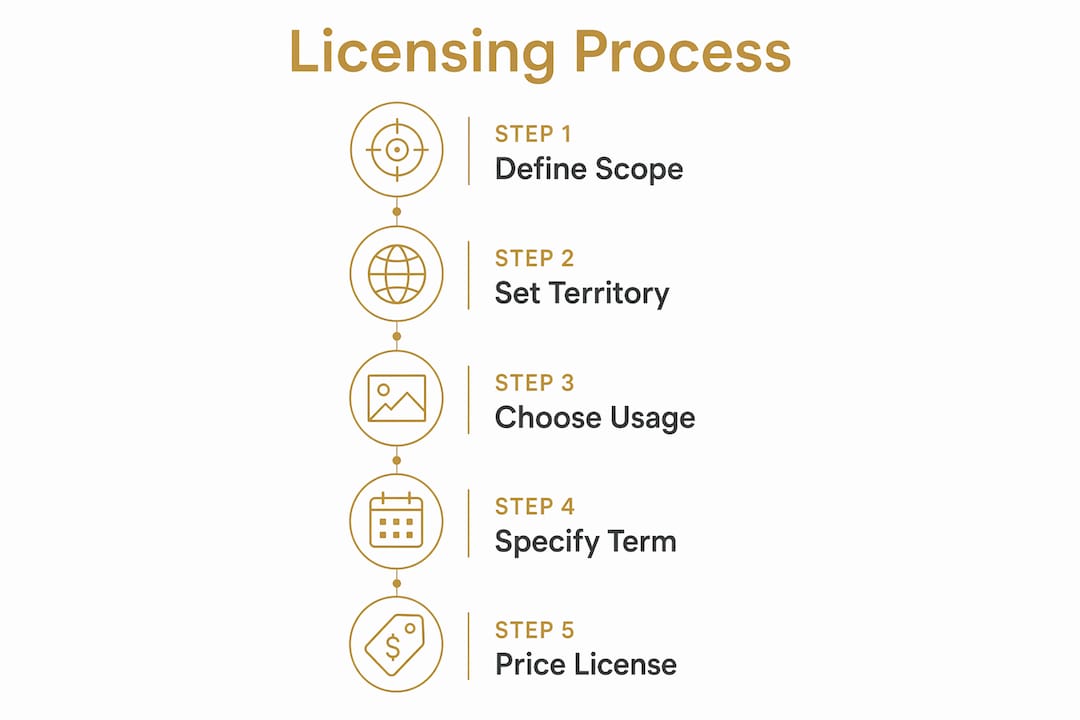
A license is the legal permission you grant a client to use your photo under specific terms while you keep the copyright. Full stop. You’re not selling the image; you’re renting defined rights to it. Every professional license turns on four key dials: scope (what the image can be used for), duration (how long), territory (where), and exclusivity (whether you can license it to others). Right now, open your most recent client contract and check whether the scope clause names specific permitted uses or just says “personal use.” That one detail determines whether your client can legally run that headshot in a paid ad.
Scope: the permitted uses (social media, print ads, editorial, packaging)
Duration: how long the license runs (one year, three years, perpetual)
Territory: geographic limits (U.S. only, worldwide)
Exclusivity: whether the client is the sole licensee or one of many
Table of Contents
How U.S. copyright works for photographers
The four licensing dials every contract must set
Common license types and when to use each
How to price image licenses without undercharging
Essential clauses every image license needs
When you need model and property releases
What to do when someone misuses your images
How to present and track licenses in your client gallery
Key Takeaways
Why licensing is the business layer photographers overlook
Deliver your licenses beautifully with Photivo
Useful sources for photographers
How U.S. copyright works for photographers
Copyright in your photograph attaches at the moment of creation. You don’t need to file anything or put a © on the file. The instant the shutter fires, you own it. Work-for-hire is the main exception: if you’re an employee shooting for an employer, or if a written contract explicitly designates the work as work-for-hire, the hiring party owns the copyright instead.
Registration with the U.S. Copyright Office is a separate step, and it matters enormously for enforcement. Without it, you can still sue for infringement, but you’re limited to actual damages, which are often hard to prove. Registration before infringement occurs (or within three months of first publication) unlocks statutory damages of up to $150,000 per willful infringement, plus attorney’s fees.
Register your most commercially valuable images before you deliver them. Statutory damages are the teeth behind any cease-and-desist letter, and you can’t access them without prior registration.
Photographers typically retain copyright and license specific uses. A client paying your session fee is buying your time and a defined set of usage rights, not ownership of the underlying work. If a client ever asks to “own” the images outright, that’s a full copyright assignment, which commands a significantly higher fee and should be executed as a written transfer, not a standard license.
The four licensing dials every contract must set
ASMP advises treating every licensing agreement as a contract that defines the specific limits of the grant. Think of copyright as a bundle of sticks: you can hand over one stick (LinkedIn use for one year) or several (all digital platforms, worldwide, three years), and each combination has a different price.
Scope: A corporate headshot might be licensed for “digital use on the client’s LinkedIn profile and company website only.” That same image used in a paid recruitment ad is a different scope entirely and warrants a separate, higher-priced license.
Duration: Wedding clients typically receive a personal-use license with no expiration. A brand campaign license might run 12 or 24 months, after which the client must renew or stop using the images.
Territory: Most portrait licenses are worldwide by default, but a regional retailer running in-store signage might only need U.S. rights, which can lower the fee and preserve your ability to license internationally.
Exclusivity: Non-exclusive means you can license the same image to multiple clients. Exclusive means you cannot, which is why exclusive licensing commands a premium. Many pros price exclusivity at three to five times the non-exclusive rate to compensate for lost future revenue and portfolio use.
Pro Tip: Offer licenses in phases. Start with a non-exclusive personal-use grant at delivery, then list a commercial-use upgrade and an exclusivity upgrade as purchasable add-ons in your gallery. Clients who need more rights can self-select into a higher tier without an awkward renegotiation.
Common license types and when to use each
License Type | Best For | Price Range | Repeat Licensing | Portfolio Rights | Release Needed |
|---|---|---|---|---|---|
Personal use | Weddings, family portraits | Lower | Low | Usually yes | Rarely |
Editorial | News, magazines, blogs | Moderate | Moderate | Usually yes | Not required |
Commercial (non-exclusive) | Corporate headshots, brand campaigns | Higher | High | Negotiated | Usually yes |
Rights-managed | Ad campaigns, packaging | Highest | Per use | Negotiated | Yes |
Royalty-free (flat fee) | Stock, broad distribution | Moderate flat | None | Rarely | Varies |
Exclusive buyout | Full ownership transfer | Premium | None | Surrendered | Yes |

Commercial use covers revenue-generating activities and requires an explicit commercial-use license. Many disputes happen when clients assume a standard delivery includes the right to run images in paid advertising. Editorial licenses cover newsworthy or public-interest uses and don’t require model releases, but they explicitly exclude commercial purposes.
Creative Commons licenses are irrevocable and can permanently limit your ability to monetize an image. For professional client work, avoid them entirely.
How to price image licenses without undercharging
Photographers often undercharge by ignoring the commercial value of their work. Separating your session fee from your license fee is the single clearest fix. The session fee covers your time and production. The license fee reflects the value the client extracts from the image.
Pricing factors to weigh for every license:
Use/scope: A billboard commands more than a social post.
Audience/run size: A national campaign reaching millions is worth more than a regional one.
Duration: Longer terms cost more.
Territory: Worldwide rights cost more than regional.
Exclusivity: Price at a multiple of your non-exclusive rate (three to five times is common).
Production and clearance costs: Include model release procurement, location fees, and any third-party clearances.
For corporate and brand photography, a usage-based rate card is the most defensible approach. For weddings and portraits, a flat personal-use license bundled into the package works well, with commercial upgrades priced separately.
Pro Tip: In your gallery, label license upgrades with plain language: “Add commercial web use for $X” or “Upgrade to exclusive rights for $X.” Clients respond to clarity, and a visible price removes the friction of asking.
Essential clauses every image license needs
A license without clear grant language is an invitation to a dispute. Every agreement should include:
Grant of rights: Named permitted uses, media, and formats
Duration and territory: Specific dates and geographic scope
Exclusivity: Stated explicitly as exclusive or non-exclusive
Sublicensing: Whether the client can pass rights to a third party (usually no)
Moral rights and attribution: Credit requirements, if any
AI-use language: Explicit prohibition or permission for training generative models (leave this vague and you’ll regret it)
Payment terms: Fee, due date, and what happens if payment lapses
Termination: What triggers termination and what happens to existing uses
Indemnity: Who bears liability if third-party rights weren’t cleared
Sample non-exclusive commercial grant language you can adapt:
For an exclusive buyout, add: “Photographer agrees not to license the Images to any third party during the license term. Exclusivity is limited to the uses specified herein.”
Common pitfalls: vague scope (“general marketing use”), missing territory, and any language that could be read as an implicit copyright transfer. If a contract says “all rights,” that phrase can be interpreted as a full assignment. Name the rights explicitly every time.
When you need model and property releases
Copyright is yours. Releases are about everyone else’s rights. Model releases protect against right-of-publicity claims and are generally required whenever a recognizable person appears in an image used for commercial purposes.
Situations that typically require releases:
Identifiable people in ads, packaging, or promotional materials
Private property used as a backdrop for commercial advertising
Trademarked artwork, logos, or murals visible in the frame
Pets owned by third parties in commercial contexts
Before finalizing a commercial license, run a pre-flight review to confirm all third-party rights are cleared. The licensor often bears responsibility for these permissions, so a missing release can void or limit the license you’re able to grant. If releases aren’t in hand, reflect that in the contract with a conditional grant: “License is contingent on Licensee obtaining signed model releases for all identifiable subjects.”
What to do when someone misuses your images
Document first. Screenshot the misuse with metadata visible, note the URL, and save the page with a tool like the Wayback Machine. Then check your contract: confirm what rights were actually granted before assuming infringement.
Register key images with the U.S. Copyright Office before you deliver them. If infringement happens after registration, you can pursue statutory damages. Without it, you’re limited to proving actual harm, which is far harder in court.
Your escalation path:
Send a polite billing notice or cease-and-desist citing the specific unauthorized use.
File a DMCA takedown for online platforms (most act within days).
If the client ignores both, consult an intellectual property attorney. Federal copyright suits are available, and for lower-value claims, some states offer small-claims options.
Registration is the prerequisite for statutory damages under U.S. law. If you haven’t registered your commercial work yet, do it before your next delivery.
How to present and track licenses in your client gallery
A repeatable workflow keeps licensing clear at every handoff and creates natural upsell moments.
Quote the license before the shoot. Include scope, duration, territory, and exclusivity in your proposal so the client sees licensing as a distinct, valued product.
Embed license language in the gallery. Display the permitted uses on the gallery landing page and require a checkbox acceptance before download. Photivo’s gallery delivery flow supports this kind of client-acceptance step, so the terms are acknowledged at the moment of access.
List license upgrades as purchasable items. Add commercial-use upgrades, extended durations, and exclusivity tiers as products in the gallery. Clients who need more can buy without a separate conversation.
Record every granted right. Keep a transaction log noting which images were licensed, to whom, under what terms, and when the license expires. This is your re-licensing calendar.
Follow up at expiration. A license renewal email six weeks before expiration is a low-effort revenue touchpoint. Clients running ongoing campaigns often renew without hesitation.
Pro Tip: Attach your release files directly to the relevant gallery images. When a client downloads a commercially licensed image, the release travels with it, and you have a clean record of what was cleared.
For photographers building out their gallery delivery workflow, embedding license terms at the point of delivery is far more defensible than a PDF sent separately and never acknowledged; see how this works at Dave & Emily’s Quirky Pub Wedding At The Bell In Ticehurst.
Key Takeaways
A license is a defined permission to use your image, not a transfer of ownership, and every license must explicitly set scope, duration, territory, and exclusivity to protect your rights and your revenue.
Point | Details |
|---|---|
Copyright is automatic, registration is strategic | Register commercially valuable images before delivery to access statutory damages if infringement occurs. |
Four dials define every license | Scope, duration, territory, and exclusivity must be stated explicitly in every agreement. |
Separate session fees from license fees | Pricing licenses as a distinct line item prevents undercharging and clarifies client expectations. |
Releases are separate from copyright | Obtain model and property releases before granting commercial licenses to avoid liability gaps. |
Photivo supports licensing at delivery | Use Photivo galleries to display license terms, require client acceptance, and sell license upgrades directly. |
Why licensing is the business layer photographers overlook
Most photographers I talk to through Photivo are meticulous about their craft and genuinely uncertain about their contracts. Not because they don’t care, but because no one taught them that licensing is where the real business lives. The shoot is the art. The license is the product. When you price a license correctly and deliver it clearly through your gallery, you’re not just protecting yourself legally. You’re building a business that can generate revenue from the same image more than once, to more than one client, across more than one use. That’s the part worth getting right.
Deliver your licenses beautifully with Photivo
Photivo is built for exactly this moment: after the edit, when your images need to reach clients with clear terms, beautiful presentation, and a path to purchase.
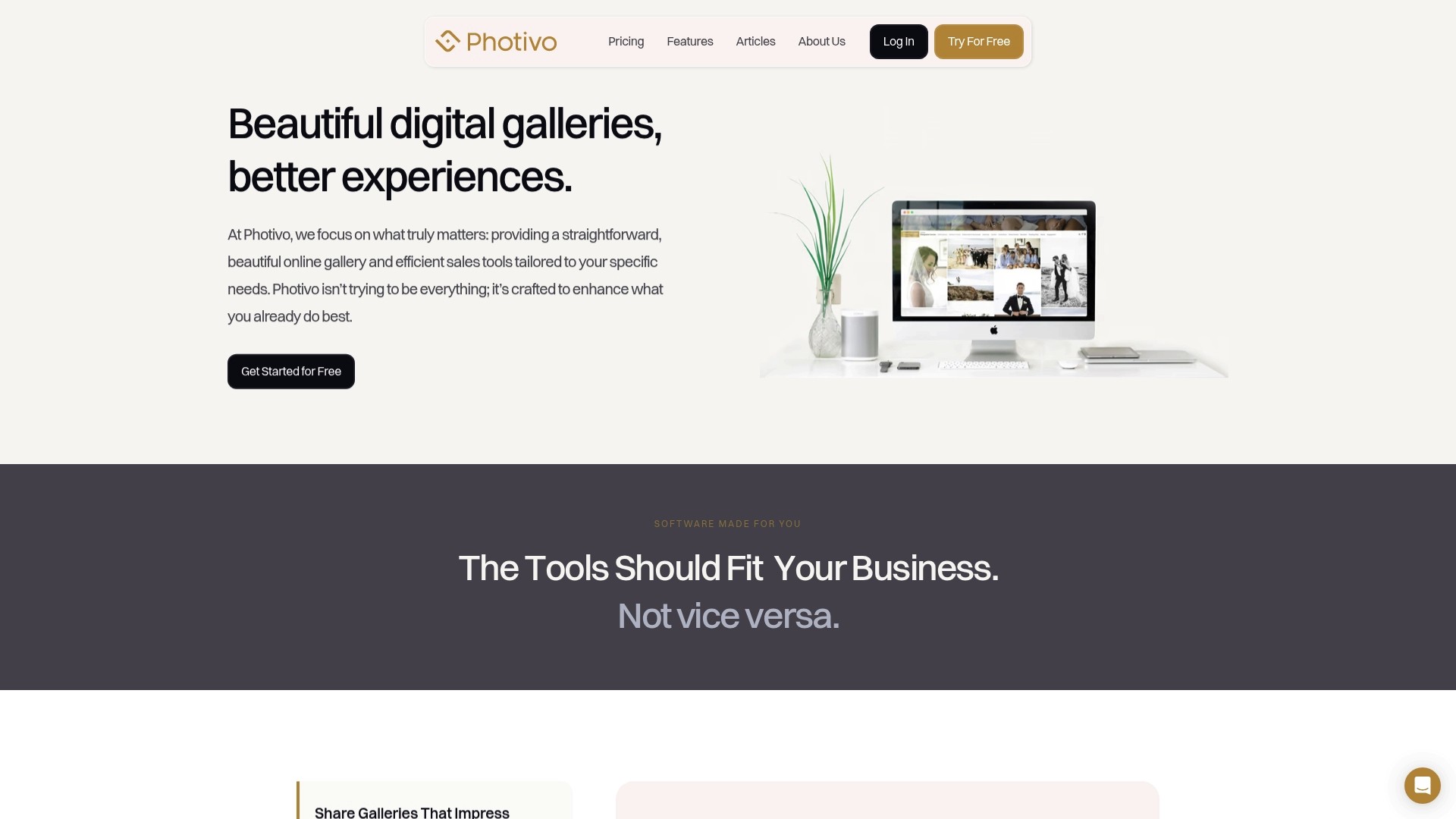
With Photivo, you can display license language directly in your client gallery, require a terms-acceptance checkbox before download, attach release files to individual images, and list commercial-use upgrades as purchasable items. Your transaction history stays organized so re-licensing conversations are easy, not awkward. Whether you’re delivering a wedding gallery with a personal-use license or a brand shoot with tiered commercial rights, Photivo gives you the structure to do it cleanly. Try Photivo free and see how straightforward licensing delivery can feel, or review the pricing plans to find the right fit for your volume.
Useful sources for photographers
U.S. Copyright Office: What Photographers Should Know — The primary source for registration requirements, statutory damages, and enforcement basics. Start here before drafting any license.
ASMP Legal Jump-Start Guide — ASMP’s practical guide to treating licenses as contracts and slicing copyright into revenue-generating grants. Useful for contract language and pricing frameworks.
ASMP Photographers’ Guide to Copyright — Covers Creative Commons risks, copyright ownership, and licensing structures for professional photographers.
Sanders Law Group: Licensing Photographs — A clear legal overview of license types, agreement terms, and what photographers should include in every contract.
Jimmy Clemmons: Licensing a Photo for Commercial Use — Practical pre-flight checklist guidance for clearing third-party rights before finalizing a commercial license.
Recommended
Image Licensing Photography: A Guide for Photographers
A license is the legal permission you grant a client to use your photo under specific terms while you keep the copyright. Full stop. You’re not selling the image; you’re renting defined rights to it. Every professional license turns on four key dials: scope (what the image can be used for), duration (how long), territory (where), and exclusivity (whether you can license it to others). Right now, open your most recent client contract and check whether the scope clause names specific permitted uses or just says “personal use.” That one detail determines whether your client can legally run that headshot in a paid ad.
Scope: the permitted uses (social media, print ads, editorial, packaging)
Duration: how long the license runs (one year, three years, perpetual)
Territory: geographic limits (U.S. only, worldwide)
Exclusivity: whether the client is the sole licensee or one of many
Table of Contents
How U.S. copyright works for photographers
The four licensing dials every contract must set
Common license types and when to use each
How to price image licenses without undercharging
Essential clauses every image license needs
When you need model and property releases
What to do when someone misuses your images
How to present and track licenses in your client gallery
Key Takeaways
Why licensing is the business layer photographers overlook
Deliver your licenses beautifully with Photivo
Useful sources for photographers
How U.S. copyright works for photographers
Copyright in your photograph attaches at the moment of creation. You don’t need to file anything or put a © on the file. The instant the shutter fires, you own it. Work-for-hire is the main exception: if you’re an employee shooting for an employer, or if a written contract explicitly designates the work as work-for-hire, the hiring party owns the copyright instead.
Registration with the U.S. Copyright Office is a separate step, and it matters enormously for enforcement. Without it, you can still sue for infringement, but you’re limited to actual damages, which are often hard to prove. Registration before infringement occurs (or within three months of first publication) unlocks statutory damages of up to $150,000 per willful infringement, plus attorney’s fees.
Register your most commercially valuable images before you deliver them. Statutory damages are the teeth behind any cease-and-desist letter, and you can’t access them without prior registration.
Photographers typically retain copyright and license specific uses. A client paying your session fee is buying your time and a defined set of usage rights, not ownership of the underlying work. If a client ever asks to “own” the images outright, that’s a full copyright assignment, which commands a significantly higher fee and should be executed as a written transfer, not a standard license.
The four licensing dials every contract must set
ASMP advises treating every licensing agreement as a contract that defines the specific limits of the grant. Think of copyright as a bundle of sticks: you can hand over one stick (LinkedIn use for one year) or several (all digital platforms, worldwide, three years), and each combination has a different price.
Scope: A corporate headshot might be licensed for “digital use on the client’s LinkedIn profile and company website only.” That same image used in a paid recruitment ad is a different scope entirely and warrants a separate, higher-priced license.
Duration: Wedding clients typically receive a personal-use license with no expiration. A brand campaign license might run 12 or 24 months, after which the client must renew or stop using the images.
Territory: Most portrait licenses are worldwide by default, but a regional retailer running in-store signage might only need U.S. rights, which can lower the fee and preserve your ability to license internationally.
Exclusivity: Non-exclusive means you can license the same image to multiple clients. Exclusive means you cannot, which is why exclusive licensing commands a premium. Many pros price exclusivity at three to five times the non-exclusive rate to compensate for lost future revenue and portfolio use.
Pro Tip: Offer licenses in phases. Start with a non-exclusive personal-use grant at delivery, then list a commercial-use upgrade and an exclusivity upgrade as purchasable add-ons in your gallery. Clients who need more rights can self-select into a higher tier without an awkward renegotiation.
Common license types and when to use each
License Type | Best For | Price Range | Repeat Licensing | Portfolio Rights | Release Needed |
|---|---|---|---|---|---|
Personal use | Weddings, family portraits | Lower | Low | Usually yes | Rarely |
Editorial | News, magazines, blogs | Moderate | Moderate | Usually yes | Not required |
Commercial (non-exclusive) | Corporate headshots, brand campaigns | Higher | High | Negotiated | Usually yes |
Rights-managed | Ad campaigns, packaging | Highest | Per use | Negotiated | Yes |
Royalty-free (flat fee) | Stock, broad distribution | Moderate flat | None | Rarely | Varies |
Exclusive buyout | Full ownership transfer | Premium | None | Surrendered | Yes |
Commercial use covers revenue-generating activities and requires an explicit commercial-use license. Many disputes happen when clients assume a standard delivery includes the right to run images in paid advertising. Editorial licenses cover newsworthy or public-interest uses and don’t require model releases, but they explicitly exclude commercial purposes.
Creative Commons licenses are irrevocable and can permanently limit your ability to monetize an image. For professional client work, avoid them entirely.
How to price image licenses without undercharging
Photographers often undercharge by ignoring the commercial value of their work. Separating your session fee from your license fee is the single clearest fix. The session fee covers your time and production. The license fee reflects the value the client extracts from the image.
Pricing factors to weigh for every license:
Use/scope: A billboard commands more than a social post.
Audience/run size: A national campaign reaching millions is worth more than a regional one.
Duration: Longer terms cost more.
Territory: Worldwide rights cost more than regional.
Exclusivity: Price at a multiple of your non-exclusive rate (three to five times is common).
Production and clearance costs: Include model release procurement, location fees, and any third-party clearances.
For corporate and brand photography, a usage-based rate card is the most defensible approach. For weddings and portraits, a flat personal-use license bundled into the package works well, with commercial upgrades priced separately.
Pro Tip: In your gallery, label license upgrades with plain language: “Add commercial web use for $X” or “Upgrade to exclusive rights for $X.” Clients respond to clarity, and a visible price removes the friction of asking.
Essential clauses every image license needs
A license without clear grant language is an invitation to a dispute. Every agreement should include:
Grant of rights: Named permitted uses, media, and formats
Duration and territory: Specific dates and geographic scope
Exclusivity: Stated explicitly as exclusive or non-exclusive
Sublicensing: Whether the client can pass rights to a third party (usually no)
Moral rights and attribution: Credit requirements, if any
AI-use language: Explicit prohibition or permission for training generative models (leave this vague and you’ll regret it)
Payment terms: Fee, due date, and what happens if payment lapses
Termination: What triggers termination and what happens to existing uses
Indemnity: Who bears liability if third-party rights weren’t cleared
Sample non-exclusive commercial grant language you can adapt:
For an exclusive buyout, add: “Photographer agrees not to license the Images to any third party during the license term. Exclusivity is limited to the uses specified herein.”
Common pitfalls: vague scope (“general marketing use”), missing territory, and any language that could be read as an implicit copyright transfer. If a contract says “all rights,” that phrase can be interpreted as a full assignment. Name the rights explicitly every time.
When you need model and property releases
Copyright is yours. Releases are about everyone else’s rights. Model releases protect against right-of-publicity claims and are generally required whenever a recognizable person appears in an image used for commercial purposes.
Situations that typically require releases:
Identifiable people in ads, packaging, or promotional materials
Private property used as a backdrop for commercial advertising
Trademarked artwork, logos, or murals visible in the frame
Pets owned by third parties in commercial contexts
Before finalizing a commercial license, run a pre-flight review to confirm all third-party rights are cleared. The licensor often bears responsibility for these permissions, so a missing release can void or limit the license you’re able to grant. If releases aren’t in hand, reflect that in the contract with a conditional grant: “License is contingent on Licensee obtaining signed model releases for all identifiable subjects.”
What to do when someone misuses your images
Document first. Screenshot the misuse with metadata visible, note the URL, and save the page with a tool like the Wayback Machine. Then check your contract: confirm what rights were actually granted before assuming infringement.
Register key images with the U.S. Copyright Office before you deliver them. If infringement happens after registration, you can pursue statutory damages. Without it, you’re limited to proving actual harm, which is far harder in court.
Your escalation path:
Send a polite billing notice or cease-and-desist citing the specific unauthorized use.
File a DMCA takedown for online platforms (most act within days).
If the client ignores both, consult an intellectual property attorney. Federal copyright suits are available, and for lower-value claims, some states offer small-claims options.
Registration is the prerequisite for statutory damages under U.S. law. If you haven’t registered your commercial work yet, do it before your next delivery.
How to present and track licenses in your client gallery
A repeatable workflow keeps licensing clear at every handoff and creates natural upsell moments.
Quote the license before the shoot. Include scope, duration, territory, and exclusivity in your proposal so the client sees licensing as a distinct, valued product.
Embed license language in the gallery. Display the permitted uses on the gallery landing page and require a checkbox acceptance before download. Photivo’s gallery delivery flow supports this kind of client-acceptance step, so the terms are acknowledged at the moment of access.
List license upgrades as purchasable items. Add commercial-use upgrades, extended durations, and exclusivity tiers as products in the gallery. Clients who need more can buy without a separate conversation.
Record every granted right. Keep a transaction log noting which images were licensed, to whom, under what terms, and when the license expires. This is your re-licensing calendar.
Follow up at expiration. A license renewal email six weeks before expiration is a low-effort revenue touchpoint. Clients running ongoing campaigns often renew without hesitation.
Pro Tip: Attach your release files directly to the relevant gallery images. When a client downloads a commercially licensed image, the release travels with it, and you have a clean record of what was cleared.
For photographers building out their gallery delivery workflow, embedding license terms at the point of delivery is far more defensible than a PDF sent separately and never acknowledged; see how this works at Dave & Emily’s Quirky Pub Wedding At The Bell In Ticehurst.
Key Takeaways
A license is a defined permission to use your image, not a transfer of ownership, and every license must explicitly set scope, duration, territory, and exclusivity to protect your rights and your revenue.
Point | Details |
|---|---|
Copyright is automatic, registration is strategic | Register commercially valuable images before delivery to access statutory damages if infringement occurs. |
Four dials define every license | Scope, duration, territory, and exclusivity must be stated explicitly in every agreement. |
Separate session fees from license fees | Pricing licenses as a distinct line item prevents undercharging and clarifies client expectations. |
Releases are separate from copyright | Obtain model and property releases before granting commercial licenses to avoid liability gaps. |
Photivo supports licensing at delivery | Use Photivo galleries to display license terms, require client acceptance, and sell license upgrades directly. |
Why licensing is the business layer photographers overlook
Most photographers I talk to through Photivo are meticulous about their craft and genuinely uncertain about their contracts. Not because they don’t care, but because no one taught them that licensing is where the real business lives. The shoot is the art. The license is the product. When you price a license correctly and deliver it clearly through your gallery, you’re not just protecting yourself legally. You’re building a business that can generate revenue from the same image more than once, to more than one client, across more than one use. That’s the part worth getting right.
Deliver your licenses beautifully with Photivo
Photivo is built for exactly this moment: after the edit, when your images need to reach clients with clear terms, beautiful presentation, and a path to purchase.
With Photivo, you can display license language directly in your client gallery, require a terms-acceptance checkbox before download, attach release files to individual images, and list commercial-use upgrades as purchasable items. Your transaction history stays organized so re-licensing conversations are easy, not awkward. Whether you’re delivering a wedding gallery with a personal-use license or a brand shoot with tiered commercial rights, Photivo gives you the structure to do it cleanly. Try Photivo free and see how straightforward licensing delivery can feel, or review the pricing plans to find the right fit for your volume.
Useful sources for photographers
U.S. Copyright Office: What Photographers Should Know — The primary source for registration requirements, statutory damages, and enforcement basics. Start here before drafting any license.
ASMP Legal Jump-Start Guide — ASMP’s practical guide to treating licenses as contracts and slicing copyright into revenue-generating grants. Useful for contract language and pricing frameworks.
ASMP Photographers’ Guide to Copyright — Covers Creative Commons risks, copyright ownership, and licensing structures for professional photographers.
Sanders Law Group: Licensing Photographs — A clear legal overview of license types, agreement terms, and what photographers should include in every contract.
Jimmy Clemmons: Licensing a Photo for Commercial Use — Practical pre-flight checklist guidance for clearing third-party rights before finalizing a commercial license.
Recommended
Explore More Articles


GEt started for free
Elevate your business with intuitive galleries with Photivo
Ready to Grow Your Photography Business? Sign Up Today!

GEt started for free
Elevate your business with intuitive galleries with Photivo
Ready to Grow Your Photography Business? Sign Up Today!
GEt started for free
Elevate your business with intuitive galleries with Photivo
Ready to Grow Your Photography Business? Sign Up Today!