
Family Photographer School Season Marketing Ideas for Fall

Family Photographer School Season Marketing Ideas for Fall
Run a focused, 6–8 week, scarcity-driven back-to-school and fall mini campaign that combines email-first VIP access, a public booking day, and gallery-based upsells. That’s the prescription. Every tactic in this article serves that single funnel, and the photographers who follow it most closely tend to fill their slots before they ever post publicly.
The six moves that matter most this season:
VIP email prelaunch: Email your warmest past clients first, before anyone else sees the offer. Rebecca Rice recommends a structured four-email booking campaign that opens with VIP access, because your list books faster and with less friction than cold social traffic.
Limited-slot minis: Cap your session count at a number you can genuinely fill. Real scarcity converts; manufactured scarcity erodes trust.
Local partnerships: Orchards, pumpkin patches, and PTA groups give you built-in audiences and beautiful locations. More on the mechanics below.
On-brand themed sets: Clean back-to-school props and warm fall palettes photograph well and sell well. Neutral tones hold up in print.
High-value print and product offers: Wall art, photo books, and holiday cards presented at gallery delivery, not as an afterthought.
Post-session upgrade funnel: The two weeks after delivery are your highest-conversion window for upgrading mini clients to full sessions.
The Professional Photographers of America (PPA) consistently points to seasonal campaigns as one of the most reliable ways to stabilize income across the year. Sprout Studio offers campaign templates and booking automation that make the operational side of running minis far more manageable. Start planning at least six weeks out, and you’ll have the assets, the list, and the pricing locked before you open a single slot.
Table of Contents
What seasonal campaign ideas book the fastest?
How to build your campaign timeline from prep to last call
Channel-by-channel tactics and swipe copy that actually convert
How to price mini sessions and increase average order value
How to deliver galleries and sell prints after the session
How to design sessions that run smoothly and sell well
Key Takeaways
Why school-season campaigns are worth building a system around
Photivo helps you deliver galleries and sell prints without the friction
What seasonal campaign ideas book the fastest?
The highest-return concepts share one trait: they give clients a clear reason to act now rather than “sometime this fall.”
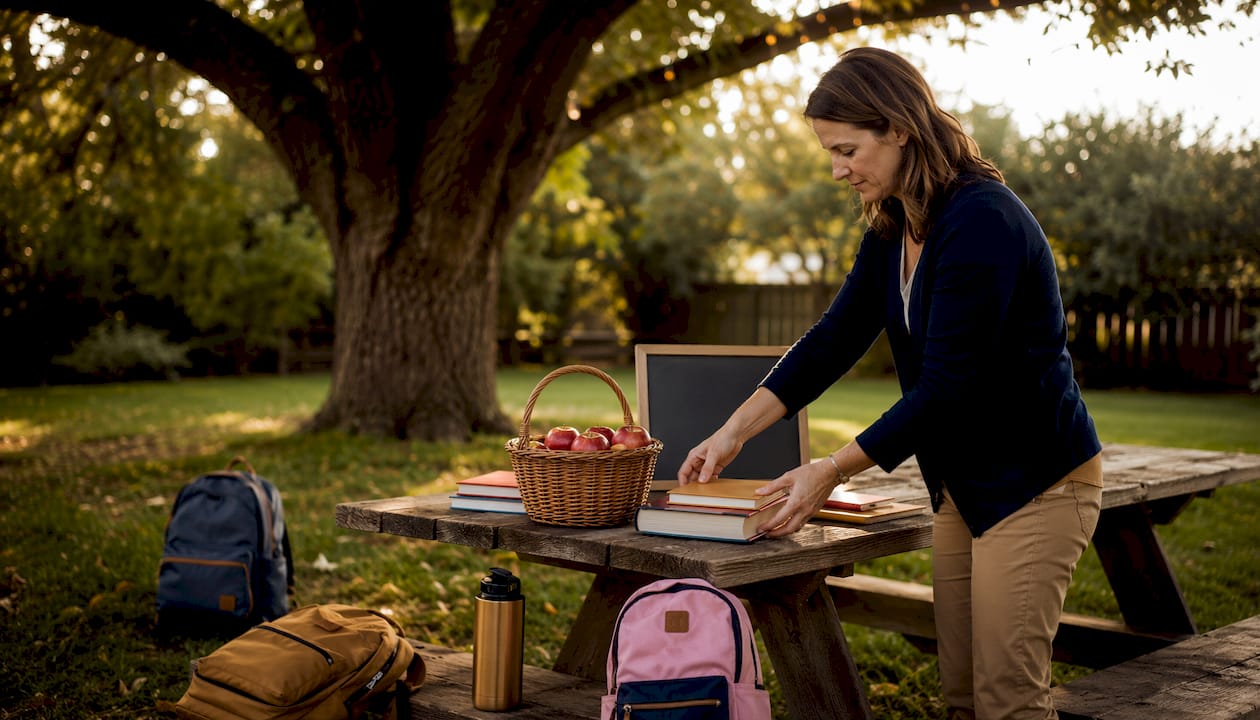
Back-to-school minis with a themed prop kit are perennially strong because parents are already in a milestone mindset. A chalkboard sign, a few crisp school supplies, and a clean neutral backdrop create images that feel personal and timely. The natural upsell here is a parent portrait add-on, a quick two-minute setup after the kids are done. Parents rarely say no when you frame it as “while we’re here.”
Fall foliage family minis anchored to a local partner give you a location, a cross-promotion audience, and a story. Reach out to an apple orchard or pumpkin patch in July, before they’re fielding requests from every photographer in your area. Offer them a gallery of finished images they can use on their own social channels in exchange for a mention in their newsletter or a table at their fall market. Revenue split arrangements are also worth discussing if the venue brings in direct bookings. For more on structuring these arrangements, the community partnership types guide covers the mechanics in detail.
Boutique school photography is underused by family photographers who think of it as volume work. Elena S. Blair argues that a lower-volume, higher-touch school contract creates predictable recurring income and acts as a lead generation engine for full family sessions. When you host those school galleries on your own site, you drive recurring traffic and grow your email list with families who are already familiar with your work.
Themed weekend pop-ups with timed slots use scarcity and VIP presales to create genuine urgency. Announce a single weekend, cap it at 12–16 slots, and open VIP access to past clients 48 hours before the public. Slots fill before most people know they’re available.
“When structured intentionally, fall minis can scale revenue dramatically. A well-priced mini can become the first step to much larger lifetime value.” — The Profitable Portrait Society
Open-studio portrait days work well for headshots and quick parent portraits with instant print add-ons. Position these as a back-to-school bonus: parents updating their own professional photos while the kids get their portraits done. It’s a different energy than a field session and attracts a slightly different client.
Mini session membership or priority access pass. Offer past mini clients a small annual fee for first access to every seasonal mini you run. It converts one-time bookings into recurring revenue and makes your planning far more predictable.
Pro Tip: Magazine Mama’s research shows that personal, story-driven August content outperforms straight discount posts. Share why fall is meaningful to you and your family before you pitch the session. That context builds trust and makes the offer feel personal rather than promotional.
How to build your campaign timeline from prep to last call
A 6–8 week pre-promotion runway gives you enough time to build anticipation, fill slots in waves, and avoid the last-minute scramble that kills margins. Here’s how to map it.
Weeks 7–8 before shoot day (Prep phase). Lock your dates, location, and pricing. Shoot or source your hero image with a real family. Build your landing page with a slot counter and an email capture form. Write all four emails in your VIP sequence. Brief any local partners and confirm cross-promotion details. Set up your print and product pricing in your gallery platform.
Weeks 5–6 (VIP warmup). Email past clients with subject lines like “You get first access” or “Before I tell anyone else…” Open VIP booking for 48–72 hours. Post one teaser on social, no booking link yet. Confirm your assistant and any staffing for shoot day.
Weeks 3–4 (Public launch). Open remaining slots to your full audience. Post the booking link publicly. Send your second email to the full list. Run a behind-the-scenes reel showing your set or location. If you’re using paid ads, activate them now with a narrow local radius.
Week 2 (Mid-run urgency). Send a “slots filling” update email. Post a countdown story. Share a finished image from a recent session to reinforce quality. If you have a waitlist, mention it.
Week 1 and shoot week (Last call and fulfillment). Send your final “last chance” email. Confirm all bookings with a wardrobe guide and directions. On shoot day, have a checkout person available for immediate product ordering. Begin editing within 48 hours of the last session.
Staffing checklist by role:
Role | Key weekly tasks |
|---|---|
Photographer | Hero image, location scouting, shot list, client confirmations |
Assistant | Prop setup, client flow management, checkout support on shoot day |
Editor | Turnaround within 5–7 days of each session; hero selects flagged first |
Studio admin | Email sends, booking confirmations, gallery delivery, order follow-up |

Schedule 15–20 minute slots for standard minis, 25–30 minutes for premium packages. Build a 10-minute buffer between every third slot for resets and overruns. For outdoor locations, have a rain-date policy written into your booking confirmation before you open a single slot.
Channel-by-channel tactics and swipe copy that actually convert
Email first, always. Social reach is unpredictable; your list is not. Your warmest clients already trust you, and VIP early access fills initial slots before you spend a dollar on promotion. Here’s a four-email sequence that works:
Email 1 (Teaser, 2 weeks before VIP open): Subject: “Something beautiful is coming your way.” Body: One paragraph about why fall is your favorite season to photograph families. No booking link. Just warmth and anticipation.
Email 2 (VIP access open): Subject: “You’re first. Fall minis are open — for 48 hours.” Body: Session details, pricing, slot count, and a direct booking link. Mention the slot cap explicitly.
Email 3 (Update/urgency, 3 days after public launch): Subject: “Half the slots are gone.” Body: How many slots remain, a finished image, and a reminder of what’s included.
Email 4 (Last call): Subject: “Last 2 spots. That’s it.” Body: Final slot count, deadline, and a single CTA button.
Social timeline. Post a teaser image with no booking link one week before VIP opens. On VIP day, post for past clients only (stories work well here). On public launch day, post the full offer with a link in bio. Mid-campaign, share a behind-the-scenes reel or a finished image. Final week: a countdown story and a last-call post. Aim for five to seven posts across the campaign, not daily noise.
Website landing page essentials. Your landing page needs a hero image with a real family, a clear headline (“Fall mini sessions, [City] — [dates]”), a visible slot counter, pricing with what’s included, and a single CTA: book now or join the waitlist. Capture emails before payment so you can nurture anyone who doesn’t book immediately.
Local outreach. A short pitch to a PTA group or orchard owner: “I’m a local family photographer running a fall mini session event on [dates]. I’d love to offer your community [X discount or first access] in exchange for a mention in your newsletter.” Keep it to three sentences. Most local businesses appreciate the offer because it gives them content too.
The scarcity principle works when the constraint is real. Genuine limited slots, honest countdown timers, and accurate “X spots remaining” language convert reliably. Manufactured urgency reverses quickly and damages your reputation.
Paid ads (if you use them). A narrow local radius (10–15 miles), a lookalike audience built from your past client list, and a single conversion goal (booking page visits or email captures) keeps spend focused. Track cost per booking, not just clicks.
Channel | Best use | Expected conversion timing |
|---|---|---|
Email (VIP list) | First-wave slot fills | 48–72 hours after send |
Email (full list) | Public launch and last call | 3–5 days after send |
Instagram/Facebook | Awareness and social proof | Ongoing across campaign |
Website landing page | Booking capture and email opt-ins | Continuous |
Local partnerships | New audience reach | 1–2 weeks after outreach |
Paid social ads | Filling remaining slots | 5–10 days after activation |
How to price mini sessions and increase average order value
Pricing starts with your cost of doing business, not with what you see other photographers charging. Calculate your time (prep, shoot, edit, delivery, admin), your location or prop costs, and your desired hourly rate. Rebecca Rice recommends establishing a minimum rate benchmark before you set a single package price, so you know the floor you can’t go below.
Sample package structure:
Package | Session length | Images delivered | Price range | Primary upsell |
|---|---|---|---|---|
Entry | 15 min | 10–15 | $250 | Digital file upgrade |
Mid | 20 min | 20–25 | $300 | Print collection or photo book |
Premium | 30 min | 30–40 | $400 | Wall art bundle + holiday cards |
These ranges reflect common market positioning for family minis in mid-size U.S. markets. Your local market and brand positioning will shift them.
The real revenue comes after the session. Photo books are one of the highest-converting upsells because they feel complete and personal, not like an add-on. Holiday cards are a natural fit for fall sessions because clients are already thinking about them. Wall art requires a bit more conversation but carries the highest margin.
Upsell scripts that work:
At gallery delivery: “I pulled your three strongest images and put them in a suggested wall art collection. You can order directly from the gallery, or I can walk you through it.”
For holiday cards: “These images are perfect for cards. I’ve already set up a card template in your gallery so you can see exactly how they’d look.”
For full-session upgrades: “If you’d love a longer session with more variety, I have a limited number of full-session spots this fall at a priority rate for mini clients.”
Policy notes. Require a deposit (typically 50%) at booking to hold the slot. State your cancellation window clearly (48–72 hours for minis is standard). Present limited availability in your booking confirmation: “Your slot is one of [X] available this weekend.” It reduces no-shows and reinforces the value of the booking.
The Profitable Portrait Society’s framework shows how studios with the right upsell structure can turn seasonal mini weekends into $20,000–$40,000 months. That kind of revenue requires intentional product placement, not just great images.
How to deliver galleries and sell prints after the session
The gallery is where the sale happens. A beautiful delivery experience, with a clear order flow and well-placed product bundles, turns a booked mini into a client who orders and returns. A well-structured portrait session gallery starts with a hero image at the top, curated selects organized by family grouping, and product bundles that are visible without requiring the client to hunt for them.
Step-by-step sales workflow:
Deliver the gallery within 5–7 days of the session. Speed matters; enthusiasm fades.
Send a guided gallery walkthrough email the same day as delivery. Highlight your top three images, name the product bundles you’ve pre-built, and include a limited-time print promo (valid for 10–14 days) to create urgency around ordering.
Three days later, send an order reminder if no purchase has been made.
At day 10, send an “expiring soon” note on the print promo.
At day 14, send a full-session upgrade offer: a time-limited discount on a full family session, framed as a natural next step.
Automation checklist:
Order reminder email (day 3 after gallery delivery)
Print promo expiration reminder (day 10)
Abandoned-cart follow-up (if your platform supports it)
Full-session upgrade offer (day 14)
Membership or priority access invite (day 21)
Pro Tip: The two-week window after gallery delivery is your highest-conversion period for both product orders and session upgrades. Don’t wait three weeks to follow up. Automate the sequence so it runs without you thinking about it.
Metrics to watch:
Booking-to-attended ratio (aim for 90%+ with a deposit policy)
Gallery conversion rate (percentage of delivered galleries that result in a product order)
Average order value (AOV) per gallery
Upsell conversion rate (percentage of mini clients who book a full session within 60 days)
Platforms like Photivo are built for exactly this workflow: gallery delivery, product bundles, automated reminders, and a clean order experience that doesn’t require the client to navigate a complicated checkout. For photographers managing multi-family mini galleries, having a system that keeps each client’s gallery organized and accessible is what separates a smooth season from a chaotic one.
How to design sessions that run smoothly and sell well
Compact minis work when every element, from the set to the shot list, is chosen with the final product in mind. A cluttered background or an overly trendy prop dates quickly and doesn’t translate to wall art. Neutral fall palettes (warm creams, rust, olive, deep burgundy) hold up across print sizes and feel timeless in a family home.
Theme and set choices that photograph and sell well:
Clean back-to-school sets: chalkboard sign, a few books, a simple wooden chair or bench. Works indoors or outdoors.
Fall orchard or pumpkin patch: natural light, organic textures, and a location that clients already associate with family memories.
Neutral outdoor field: golden hour light, minimal props, maximum versatility for wall art crops.
Slot timing and shot list:
15-minute slot: 2–3 family groupings, 1 hero portrait per child, 1 full family image. That’s your minimum for a sellable gallery.
20-minute slot: add sibling portraits and a parent-only image.
30-minute slot: full variety including candids, individual portraits, and a lifestyle sequence.
Build a shot list of 6–8 images per slot and stick to it. Clients who feel guided through the session leave happier than those who feel like they’re wandering.
Wardrobe guidance to send clients before the session:
Choose a palette of 2–3 complementary colors, not matching outfits.
Avoid small logos, busy patterns, and neon colors (they distract in print).
Layers photograph beautifully: a cardigan, a scarf, a denim jacket.
For siblings: coordinate, don’t match. One child in rust, one in cream, one in olive reads as intentional and cohesive.
Staffing and time management:
One assistant handles prop resets and client flow between slots.
A second person (or the assistant, if volume is low) manages checkout: showing the product menu and capturing immediate orders while the energy from the session is still fresh.
Turnaround time: commit to 5–7 days and hold to it. Late galleries lose sales. For business portrait add-ons during open-studio days, a 48-hour turnaround is worth advertising as a feature.
Running a mini season well is a production, not just a shoot day. The photographers who treat it that way, with a staffed set, a pre-built shot list, and a checkout process built in, are the ones who look back at October and feel proud of both the images and the revenue.
Key Takeaways
A focused, 6–8 week back-to-school and fall mini campaign that combines VIP email access, genuine scarcity, and a post-session upgrade funnel is the most reliable way to stabilize seasonal income and convert new clients into long-term ones.
Point | Details |
|---|---|
Start 6–8 weeks out | Lock dates, hero image, pricing, and email sequence before opening a single slot. |
Email your VIP list first | Past clients book faster; give them 48–72 hours of exclusive access before public launch. |
Build upsells into the gallery | Photo books, wall art, and holiday cards presented at delivery drive the highest AOV. |
Follow up within 14 days | The two-week post-delivery window is your peak conversion period for orders and full-session upgrades. |
Use Photivo for delivery and sales | Photivo’s gallery and sales platform handles product bundles, automated reminders, and a clean order flow that supports the entire post-session workflow. |
Why school-season campaigns are worth building a system around
Most photographers treat fall minis as a burst of income, a busy weekend that pays well and then disappears. That framing undersells what a well-run seasonal campaign actually does for a business.
The school season is the single most reliable moment in the year when families are already thinking about capturing this chapter. Kids have changed. The year has moved. Parents feel it. Your job isn’t to convince them they need photos; it’s to make booking with you the obvious, easy choice before the moment passes.
What I find underappreciated is the funnel logic. A mini session isn’t a transaction; it’s an introduction. The families who book a 20-minute slot in October and receive a beautiful gallery with a warm follow-up are far more likely to book a full session in the spring, order holiday cards in November, and refer a friend before the year is out. The session fee is almost beside the point. The lifetime value of a well-nurtured mini client is where the real business lives.
The upgrade offer is the move most photographers skip. A time-limited full-session discount, sent at day 14 after gallery delivery, converts at a surprisingly high rate because the client is still emotionally connected to the images. They’ve just seen their family looking beautiful. The offer feels like a natural continuation, not a sales pitch. Send it. Every time.
Photivo helps you deliver galleries and sell prints without the friction
After a full mini season, the last thing you want is a clunky delivery process that slows down orders and loses the momentum you built on shoot day. Photivo is the gallery and sales platform built for exactly this moment: you’ve done the creative work, and now you need a beautiful, personal client experience that moves product without requiring you to chase people down.
With Photivo, you deliver branded galleries, pre-build product bundles (wall art, photo books, holiday cards, digital files), and set up automated order reminders that run through your entire post-session nurture window. The order flow is clean and personal, the kind of experience that feels like an extension of your brand rather than a generic checkout page. It plugs directly into the workflow this article describes: gallery delivery, guided walkthrough email, limited-time print promo, and upgrade offer, all supported by a platform that keeps each client’s gallery organized and accessible.
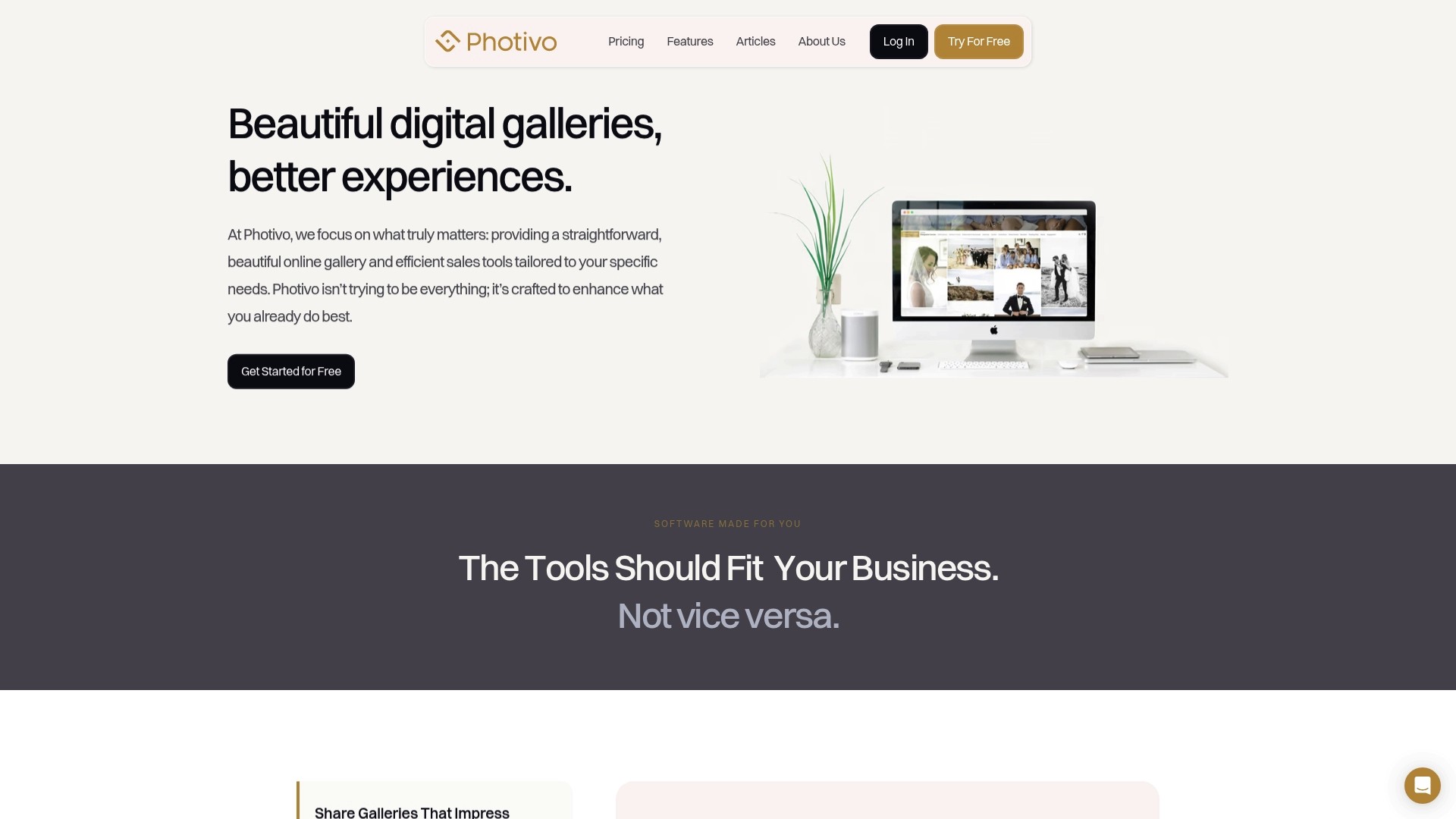
If you’re planning your fall mini season and want a delivery and sales experience that reflects the quality of your work, try Photivo free and see how it fits your workflow. No pressure. Just a cleaner way to close the season strong.
Useful sources and further reading
How to Plan Fall Mini Sessions, Rebecca Rice — Primary source for the 6–8 week runway, VIP email sequence, and post-session upgrade timing used throughout this article.
How to Book Out Your Fall Minis FAST, Rebecca Rice — Practical booking tactics including location selection, promo image strategy, and slot management.
Why School Photography Is the Smartest Business Model for Family Photographers, Elena S. Blair — The case for boutique school contracts as a lead generation and recurring income system; used in the campaign ideas and gallery workflow sections.
How Fall Minis Can Lead to 40K Months, The Profitable Portrait Society — Revenue potential and upsell structure for seasonal mini campaigns; used in pricing and monetization.
Top 7 Photography Marketing Ideas for August, Magazine Mama — Personal story-driven marketing and August campaign tactics; used in campaign ideas and social copy guidance.
The Scarcity Principle in Marketing, Advergize — Psychology and ethics of scarcity and urgency; used in promotion channels and pricing sections.
Urgency and Scarcity Marketing: Ethical Tactics That Convert, ConversionStudio — Data on countdown timer and scarcity signal conversion lifts; used in promotion channels section.
The Scarcity Principle: How 7 Brands Created High Demand, HubSpot — Brand examples of scarcity in practice; background context for urgency tactics.
Professional Photographers of America (PPA) — Industry reference for seasonal campaign strategy and business benchmarks.
Why Wedding Studios Scale with Software, The Special Wedding Blog — Useful context on automation and systems for running high-volume seasonal seasons; relevant to staffing and workflow planning.
Recommended
Family Photographer School Season Marketing Ideas for Fall
Run a focused, 6–8 week, scarcity-driven back-to-school and fall mini campaign that combines email-first VIP access, a public booking day, and gallery-based upsells. That’s the prescription. Every tactic in this article serves that single funnel, and the photographers who follow it most closely tend to fill their slots before they ever post publicly.
The six moves that matter most this season:
VIP email prelaunch: Email your warmest past clients first, before anyone else sees the offer. Rebecca Rice recommends a structured four-email booking campaign that opens with VIP access, because your list books faster and with less friction than cold social traffic.
Limited-slot minis: Cap your session count at a number you can genuinely fill. Real scarcity converts; manufactured scarcity erodes trust.
Local partnerships: Orchards, pumpkin patches, and PTA groups give you built-in audiences and beautiful locations. More on the mechanics below.
On-brand themed sets: Clean back-to-school props and warm fall palettes photograph well and sell well. Neutral tones hold up in print.
High-value print and product offers: Wall art, photo books, and holiday cards presented at gallery delivery, not as an afterthought.
Post-session upgrade funnel: The two weeks after delivery are your highest-conversion window for upgrading mini clients to full sessions.
The Professional Photographers of America (PPA) consistently points to seasonal campaigns as one of the most reliable ways to stabilize income across the year. Sprout Studio offers campaign templates and booking automation that make the operational side of running minis far more manageable. Start planning at least six weeks out, and you’ll have the assets, the list, and the pricing locked before you open a single slot.
Table of Contents
What seasonal campaign ideas book the fastest?
How to build your campaign timeline from prep to last call
Channel-by-channel tactics and swipe copy that actually convert
How to price mini sessions and increase average order value
How to deliver galleries and sell prints after the session
How to design sessions that run smoothly and sell well
Key Takeaways
Why school-season campaigns are worth building a system around
Photivo helps you deliver galleries and sell prints without the friction
What seasonal campaign ideas book the fastest?
The highest-return concepts share one trait: they give clients a clear reason to act now rather than “sometime this fall.”
Back-to-school minis with a themed prop kit are perennially strong because parents are already in a milestone mindset. A chalkboard sign, a few crisp school supplies, and a clean neutral backdrop create images that feel personal and timely. The natural upsell here is a parent portrait add-on, a quick two-minute setup after the kids are done. Parents rarely say no when you frame it as “while we’re here.”
Fall foliage family minis anchored to a local partner give you a location, a cross-promotion audience, and a story. Reach out to an apple orchard or pumpkin patch in July, before they’re fielding requests from every photographer in your area. Offer them a gallery of finished images they can use on their own social channels in exchange for a mention in their newsletter or a table at their fall market. Revenue split arrangements are also worth discussing if the venue brings in direct bookings. For more on structuring these arrangements, the community partnership types guide covers the mechanics in detail.
Boutique school photography is underused by family photographers who think of it as volume work. Elena S. Blair argues that a lower-volume, higher-touch school contract creates predictable recurring income and acts as a lead generation engine for full family sessions. When you host those school galleries on your own site, you drive recurring traffic and grow your email list with families who are already familiar with your work.
Themed weekend pop-ups with timed slots use scarcity and VIP presales to create genuine urgency. Announce a single weekend, cap it at 12–16 slots, and open VIP access to past clients 48 hours before the public. Slots fill before most people know they’re available.
“When structured intentionally, fall minis can scale revenue dramatically. A well-priced mini can become the first step to much larger lifetime value.” — The Profitable Portrait Society
Open-studio portrait days work well for headshots and quick parent portraits with instant print add-ons. Position these as a back-to-school bonus: parents updating their own professional photos while the kids get their portraits done. It’s a different energy than a field session and attracts a slightly different client.
Mini session membership or priority access pass. Offer past mini clients a small annual fee for first access to every seasonal mini you run. It converts one-time bookings into recurring revenue and makes your planning far more predictable.
Pro Tip: Magazine Mama’s research shows that personal, story-driven August content outperforms straight discount posts. Share why fall is meaningful to you and your family before you pitch the session. That context builds trust and makes the offer feel personal rather than promotional.
How to build your campaign timeline from prep to last call
A 6–8 week pre-promotion runway gives you enough time to build anticipation, fill slots in waves, and avoid the last-minute scramble that kills margins. Here’s how to map it.
Weeks 7–8 before shoot day (Prep phase). Lock your dates, location, and pricing. Shoot or source your hero image with a real family. Build your landing page with a slot counter and an email capture form. Write all four emails in your VIP sequence. Brief any local partners and confirm cross-promotion details. Set up your print and product pricing in your gallery platform.
Weeks 5–6 (VIP warmup). Email past clients with subject lines like “You get first access” or “Before I tell anyone else…” Open VIP booking for 48–72 hours. Post one teaser on social, no booking link yet. Confirm your assistant and any staffing for shoot day.
Weeks 3–4 (Public launch). Open remaining slots to your full audience. Post the booking link publicly. Send your second email to the full list. Run a behind-the-scenes reel showing your set or location. If you’re using paid ads, activate them now with a narrow local radius.
Week 2 (Mid-run urgency). Send a “slots filling” update email. Post a countdown story. Share a finished image from a recent session to reinforce quality. If you have a waitlist, mention it.
Week 1 and shoot week (Last call and fulfillment). Send your final “last chance” email. Confirm all bookings with a wardrobe guide and directions. On shoot day, have a checkout person available for immediate product ordering. Begin editing within 48 hours of the last session.
Staffing checklist by role:
Role | Key weekly tasks |
|---|---|
Photographer | Hero image, location scouting, shot list, client confirmations |
Assistant | Prop setup, client flow management, checkout support on shoot day |
Editor | Turnaround within 5–7 days of each session; hero selects flagged first |
Studio admin | Email sends, booking confirmations, gallery delivery, order follow-up |
Schedule 15–20 minute slots for standard minis, 25–30 minutes for premium packages. Build a 10-minute buffer between every third slot for resets and overruns. For outdoor locations, have a rain-date policy written into your booking confirmation before you open a single slot.
Channel-by-channel tactics and swipe copy that actually convert
Email first, always. Social reach is unpredictable; your list is not. Your warmest clients already trust you, and VIP early access fills initial slots before you spend a dollar on promotion. Here’s a four-email sequence that works:
Email 1 (Teaser, 2 weeks before VIP open): Subject: “Something beautiful is coming your way.” Body: One paragraph about why fall is your favorite season to photograph families. No booking link. Just warmth and anticipation.
Email 2 (VIP access open): Subject: “You’re first. Fall minis are open — for 48 hours.” Body: Session details, pricing, slot count, and a direct booking link. Mention the slot cap explicitly.
Email 3 (Update/urgency, 3 days after public launch): Subject: “Half the slots are gone.” Body: How many slots remain, a finished image, and a reminder of what’s included.
Email 4 (Last call): Subject: “Last 2 spots. That’s it.” Body: Final slot count, deadline, and a single CTA button.
Social timeline. Post a teaser image with no booking link one week before VIP opens. On VIP day, post for past clients only (stories work well here). On public launch day, post the full offer with a link in bio. Mid-campaign, share a behind-the-scenes reel or a finished image. Final week: a countdown story and a last-call post. Aim for five to seven posts across the campaign, not daily noise.
Website landing page essentials. Your landing page needs a hero image with a real family, a clear headline (“Fall mini sessions, [City] — [dates]”), a visible slot counter, pricing with what’s included, and a single CTA: book now or join the waitlist. Capture emails before payment so you can nurture anyone who doesn’t book immediately.
Local outreach. A short pitch to a PTA group or orchard owner: “I’m a local family photographer running a fall mini session event on [dates]. I’d love to offer your community [X discount or first access] in exchange for a mention in your newsletter.” Keep it to three sentences. Most local businesses appreciate the offer because it gives them content too.
The scarcity principle works when the constraint is real. Genuine limited slots, honest countdown timers, and accurate “X spots remaining” language convert reliably. Manufactured urgency reverses quickly and damages your reputation.
Paid ads (if you use them). A narrow local radius (10–15 miles), a lookalike audience built from your past client list, and a single conversion goal (booking page visits or email captures) keeps spend focused. Track cost per booking, not just clicks.
Channel | Best use | Expected conversion timing |
|---|---|---|
Email (VIP list) | First-wave slot fills | 48–72 hours after send |
Email (full list) | Public launch and last call | 3–5 days after send |
Instagram/Facebook | Awareness and social proof | Ongoing across campaign |
Website landing page | Booking capture and email opt-ins | Continuous |
Local partnerships | New audience reach | 1–2 weeks after outreach |
Paid social ads | Filling remaining slots | 5–10 days after activation |
How to price mini sessions and increase average order value
Pricing starts with your cost of doing business, not with what you see other photographers charging. Calculate your time (prep, shoot, edit, delivery, admin), your location or prop costs, and your desired hourly rate. Rebecca Rice recommends establishing a minimum rate benchmark before you set a single package price, so you know the floor you can’t go below.
Sample package structure:
Package | Session length | Images delivered | Price range | Primary upsell |
|---|---|---|---|---|
Entry | 15 min | 10–15 | $250 | Digital file upgrade |
Mid | 20 min | 20–25 | $300 | Print collection or photo book |
Premium | 30 min | 30–40 | $400 | Wall art bundle + holiday cards |
These ranges reflect common market positioning for family minis in mid-size U.S. markets. Your local market and brand positioning will shift them.
The real revenue comes after the session. Photo books are one of the highest-converting upsells because they feel complete and personal, not like an add-on. Holiday cards are a natural fit for fall sessions because clients are already thinking about them. Wall art requires a bit more conversation but carries the highest margin.
Upsell scripts that work:
At gallery delivery: “I pulled your three strongest images and put them in a suggested wall art collection. You can order directly from the gallery, or I can walk you through it.”
For holiday cards: “These images are perfect for cards. I’ve already set up a card template in your gallery so you can see exactly how they’d look.”
For full-session upgrades: “If you’d love a longer session with more variety, I have a limited number of full-session spots this fall at a priority rate for mini clients.”
Policy notes. Require a deposit (typically 50%) at booking to hold the slot. State your cancellation window clearly (48–72 hours for minis is standard). Present limited availability in your booking confirmation: “Your slot is one of [X] available this weekend.” It reduces no-shows and reinforces the value of the booking.
The Profitable Portrait Society’s framework shows how studios with the right upsell structure can turn seasonal mini weekends into $20,000–$40,000 months. That kind of revenue requires intentional product placement, not just great images.
How to deliver galleries and sell prints after the session
The gallery is where the sale happens. A beautiful delivery experience, with a clear order flow and well-placed product bundles, turns a booked mini into a client who orders and returns. A well-structured portrait session gallery starts with a hero image at the top, curated selects organized by family grouping, and product bundles that are visible without requiring the client to hunt for them.
Step-by-step sales workflow:
Deliver the gallery within 5–7 days of the session. Speed matters; enthusiasm fades.
Send a guided gallery walkthrough email the same day as delivery. Highlight your top three images, name the product bundles you’ve pre-built, and include a limited-time print promo (valid for 10–14 days) to create urgency around ordering.
Three days later, send an order reminder if no purchase has been made.
At day 10, send an “expiring soon” note on the print promo.
At day 14, send a full-session upgrade offer: a time-limited discount on a full family session, framed as a natural next step.
Automation checklist:
Order reminder email (day 3 after gallery delivery)
Print promo expiration reminder (day 10)
Abandoned-cart follow-up (if your platform supports it)
Full-session upgrade offer (day 14)
Membership or priority access invite (day 21)
Pro Tip: The two-week window after gallery delivery is your highest-conversion period for both product orders and session upgrades. Don’t wait three weeks to follow up. Automate the sequence so it runs without you thinking about it.
Metrics to watch:
Booking-to-attended ratio (aim for 90%+ with a deposit policy)
Gallery conversion rate (percentage of delivered galleries that result in a product order)
Average order value (AOV) per gallery
Upsell conversion rate (percentage of mini clients who book a full session within 60 days)
Platforms like Photivo are built for exactly this workflow: gallery delivery, product bundles, automated reminders, and a clean order experience that doesn’t require the client to navigate a complicated checkout. For photographers managing multi-family mini galleries, having a system that keeps each client’s gallery organized and accessible is what separates a smooth season from a chaotic one.
How to design sessions that run smoothly and sell well
Compact minis work when every element, from the set to the shot list, is chosen with the final product in mind. A cluttered background or an overly trendy prop dates quickly and doesn’t translate to wall art. Neutral fall palettes (warm creams, rust, olive, deep burgundy) hold up across print sizes and feel timeless in a family home.
Theme and set choices that photograph and sell well:
Clean back-to-school sets: chalkboard sign, a few books, a simple wooden chair or bench. Works indoors or outdoors.
Fall orchard or pumpkin patch: natural light, organic textures, and a location that clients already associate with family memories.
Neutral outdoor field: golden hour light, minimal props, maximum versatility for wall art crops.
Slot timing and shot list:
15-minute slot: 2–3 family groupings, 1 hero portrait per child, 1 full family image. That’s your minimum for a sellable gallery.
20-minute slot: add sibling portraits and a parent-only image.
30-minute slot: full variety including candids, individual portraits, and a lifestyle sequence.
Build a shot list of 6–8 images per slot and stick to it. Clients who feel guided through the session leave happier than those who feel like they’re wandering.
Wardrobe guidance to send clients before the session:
Choose a palette of 2–3 complementary colors, not matching outfits.
Avoid small logos, busy patterns, and neon colors (they distract in print).
Layers photograph beautifully: a cardigan, a scarf, a denim jacket.
For siblings: coordinate, don’t match. One child in rust, one in cream, one in olive reads as intentional and cohesive.
Staffing and time management:
One assistant handles prop resets and client flow between slots.
A second person (or the assistant, if volume is low) manages checkout: showing the product menu and capturing immediate orders while the energy from the session is still fresh.
Turnaround time: commit to 5–7 days and hold to it. Late galleries lose sales. For business portrait add-ons during open-studio days, a 48-hour turnaround is worth advertising as a feature.
Running a mini season well is a production, not just a shoot day. The photographers who treat it that way, with a staffed set, a pre-built shot list, and a checkout process built in, are the ones who look back at October and feel proud of both the images and the revenue.
Key Takeaways
A focused, 6–8 week back-to-school and fall mini campaign that combines VIP email access, genuine scarcity, and a post-session upgrade funnel is the most reliable way to stabilize seasonal income and convert new clients into long-term ones.
Point | Details |
|---|---|
Start 6–8 weeks out | Lock dates, hero image, pricing, and email sequence before opening a single slot. |
Email your VIP list first | Past clients book faster; give them 48–72 hours of exclusive access before public launch. |
Build upsells into the gallery | Photo books, wall art, and holiday cards presented at delivery drive the highest AOV. |
Follow up within 14 days | The two-week post-delivery window is your peak conversion period for orders and full-session upgrades. |
Use Photivo for delivery and sales | Photivo’s gallery and sales platform handles product bundles, automated reminders, and a clean order flow that supports the entire post-session workflow. |
Why school-season campaigns are worth building a system around
Most photographers treat fall minis as a burst of income, a busy weekend that pays well and then disappears. That framing undersells what a well-run seasonal campaign actually does for a business.
The school season is the single most reliable moment in the year when families are already thinking about capturing this chapter. Kids have changed. The year has moved. Parents feel it. Your job isn’t to convince them they need photos; it’s to make booking with you the obvious, easy choice before the moment passes.
What I find underappreciated is the funnel logic. A mini session isn’t a transaction; it’s an introduction. The families who book a 20-minute slot in October and receive a beautiful gallery with a warm follow-up are far more likely to book a full session in the spring, order holiday cards in November, and refer a friend before the year is out. The session fee is almost beside the point. The lifetime value of a well-nurtured mini client is where the real business lives.
The upgrade offer is the move most photographers skip. A time-limited full-session discount, sent at day 14 after gallery delivery, converts at a surprisingly high rate because the client is still emotionally connected to the images. They’ve just seen their family looking beautiful. The offer feels like a natural continuation, not a sales pitch. Send it. Every time.
Photivo helps you deliver galleries and sell prints without the friction
After a full mini season, the last thing you want is a clunky delivery process that slows down orders and loses the momentum you built on shoot day. Photivo is the gallery and sales platform built for exactly this moment: you’ve done the creative work, and now you need a beautiful, personal client experience that moves product without requiring you to chase people down.
With Photivo, you deliver branded galleries, pre-build product bundles (wall art, photo books, holiday cards, digital files), and set up automated order reminders that run through your entire post-session nurture window. The order flow is clean and personal, the kind of experience that feels like an extension of your brand rather than a generic checkout page. It plugs directly into the workflow this article describes: gallery delivery, guided walkthrough email, limited-time print promo, and upgrade offer, all supported by a platform that keeps each client’s gallery organized and accessible.
If you’re planning your fall mini season and want a delivery and sales experience that reflects the quality of your work, try Photivo free and see how it fits your workflow. No pressure. Just a cleaner way to close the season strong.
Useful sources and further reading
How to Plan Fall Mini Sessions, Rebecca Rice — Primary source for the 6–8 week runway, VIP email sequence, and post-session upgrade timing used throughout this article.
How to Book Out Your Fall Minis FAST, Rebecca Rice — Practical booking tactics including location selection, promo image strategy, and slot management.
Why School Photography Is the Smartest Business Model for Family Photographers, Elena S. Blair — The case for boutique school contracts as a lead generation and recurring income system; used in the campaign ideas and gallery workflow sections.
How Fall Minis Can Lead to 40K Months, The Profitable Portrait Society — Revenue potential and upsell structure for seasonal mini campaigns; used in pricing and monetization.
Top 7 Photography Marketing Ideas for August, Magazine Mama — Personal story-driven marketing and August campaign tactics; used in campaign ideas and social copy guidance.
The Scarcity Principle in Marketing, Advergize — Psychology and ethics of scarcity and urgency; used in promotion channels and pricing sections.
Urgency and Scarcity Marketing: Ethical Tactics That Convert, ConversionStudio — Data on countdown timer and scarcity signal conversion lifts; used in promotion channels section.
The Scarcity Principle: How 7 Brands Created High Demand, HubSpot — Brand examples of scarcity in practice; background context for urgency tactics.
Professional Photographers of America (PPA) — Industry reference for seasonal campaign strategy and business benchmarks.
Why Wedding Studios Scale with Software, The Special Wedding Blog — Useful context on automation and systems for running high-volume seasonal seasons; relevant to staffing and workflow planning.
Recommended
Explore More Articles


GEt started for free
Elevate your business with intuitive galleries with Photivo
Ready to Grow Your Photography Business? Sign Up Today!

GEt started for free
Elevate your business with intuitive galleries with Photivo
Ready to Grow Your Photography Business? Sign Up Today!
GEt started for free
Elevate your business with intuitive galleries with Photivo
Ready to Grow Your Photography Business? Sign Up Today!